
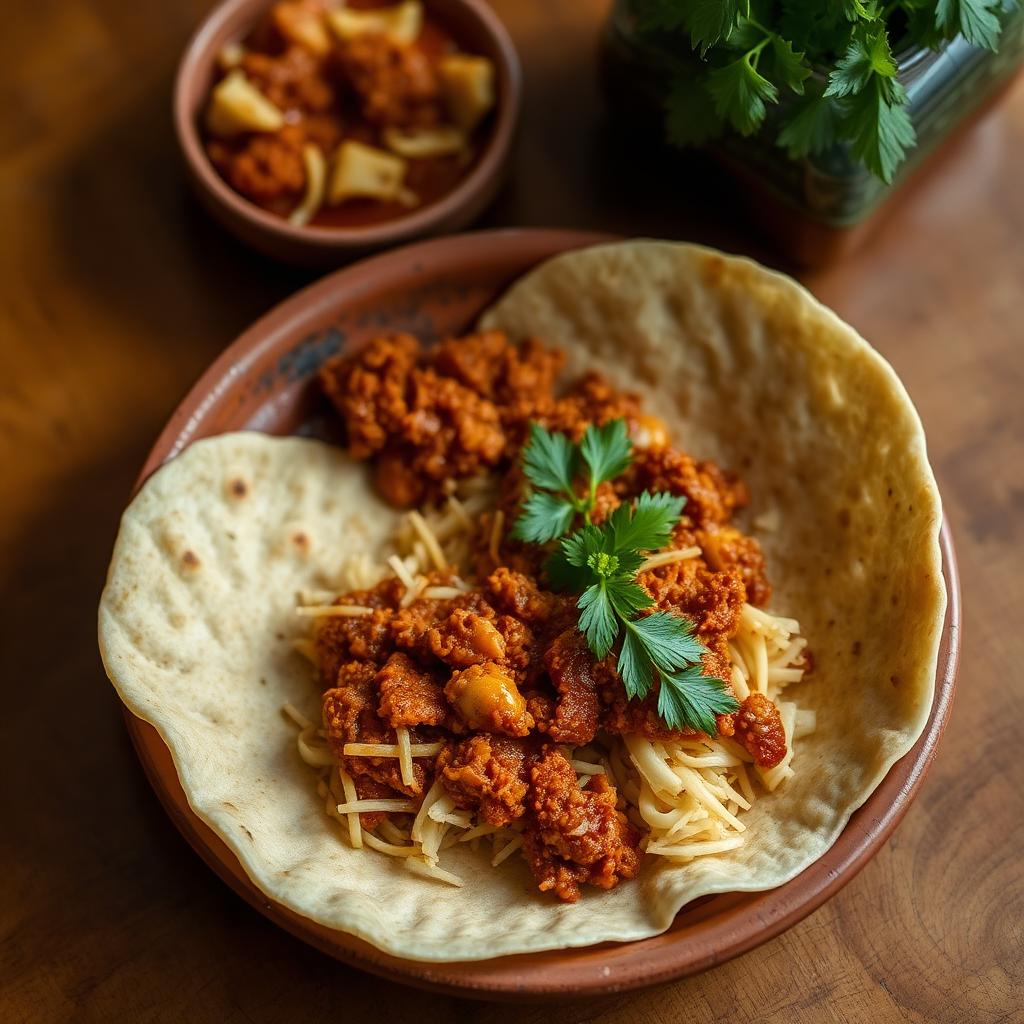
Chechebsa
cheh-CHEB-sahThe morning bread
A shredded flatbread (kita) tossed hot in niter kibbeh, spiced clarified butter, and berbere. Served for breakfast with honey or a glass of tea, often shared straight from the pan.
Culture
The Oromo table is shaped by the highlands, grain, dairy, spiced butter, and coffee. What follows isn't a menu; it's a short guide to the dishes and rituals that anchor Oromo hospitality, from the morning pan of chechebsa to the small clay cups of buna passed around a room.
The morning bread
A shredded flatbread (kita) tossed hot in niter kibbeh, spiced clarified butter, and berbere. Served for breakfast with honey or a glass of tea, often shared straight from the pan.
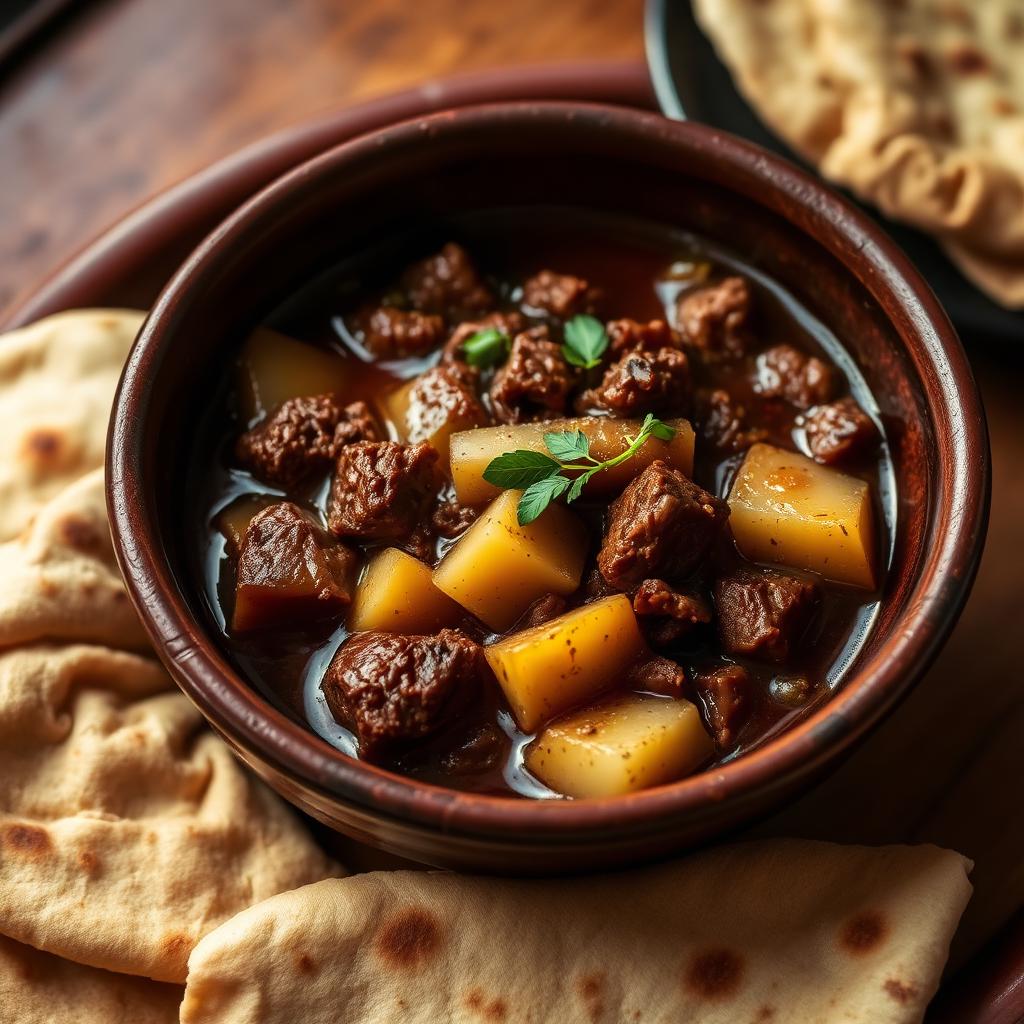
The everyday stew
A slow-simmered stew of beef or lamb with onions, garlic, and mitmita, thickened with potato. Eaten with injera or with marqaa, the Oromo answer to a Sunday roast.
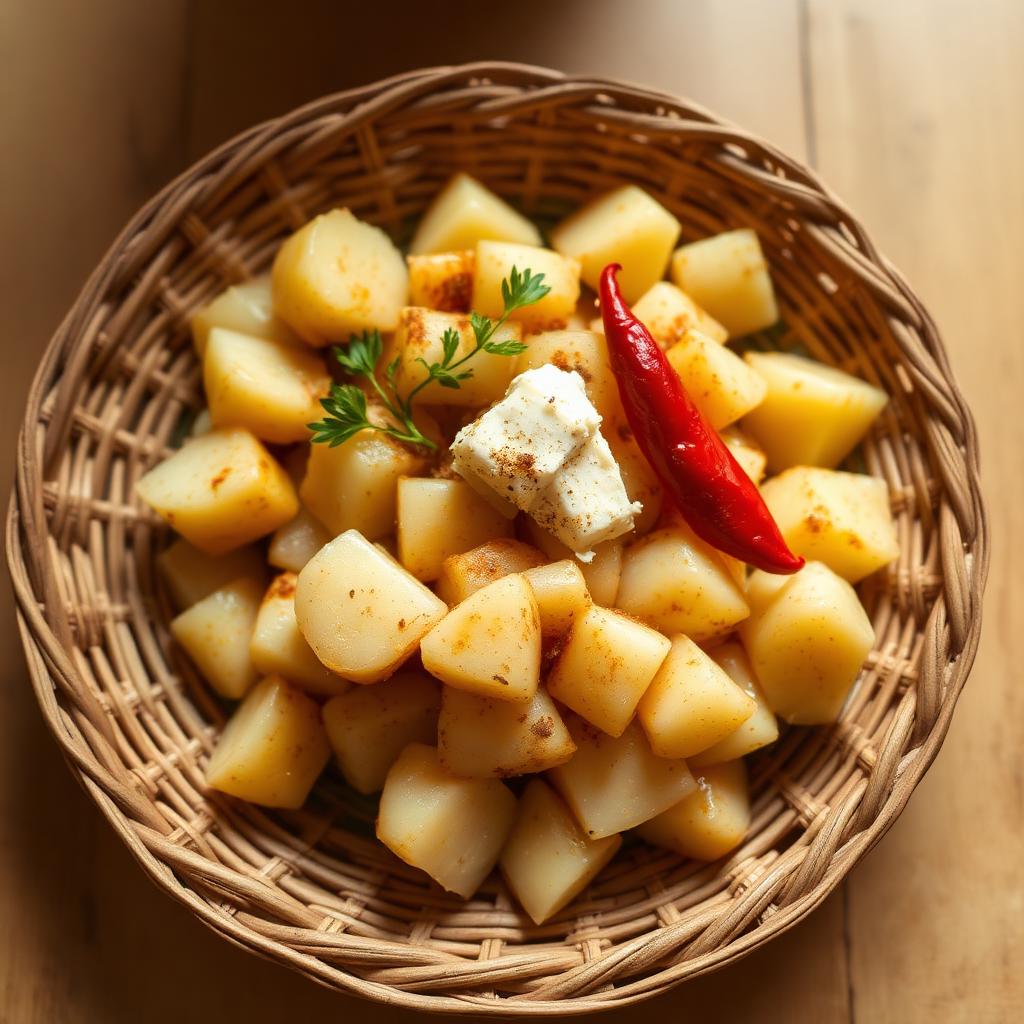
The western Oromia root
A starchy tuber native to western Oromia, boiled and mashed with spiced butter, chili, and cottage cheese (ayib). Traditionally offered to new mothers and honored guests.
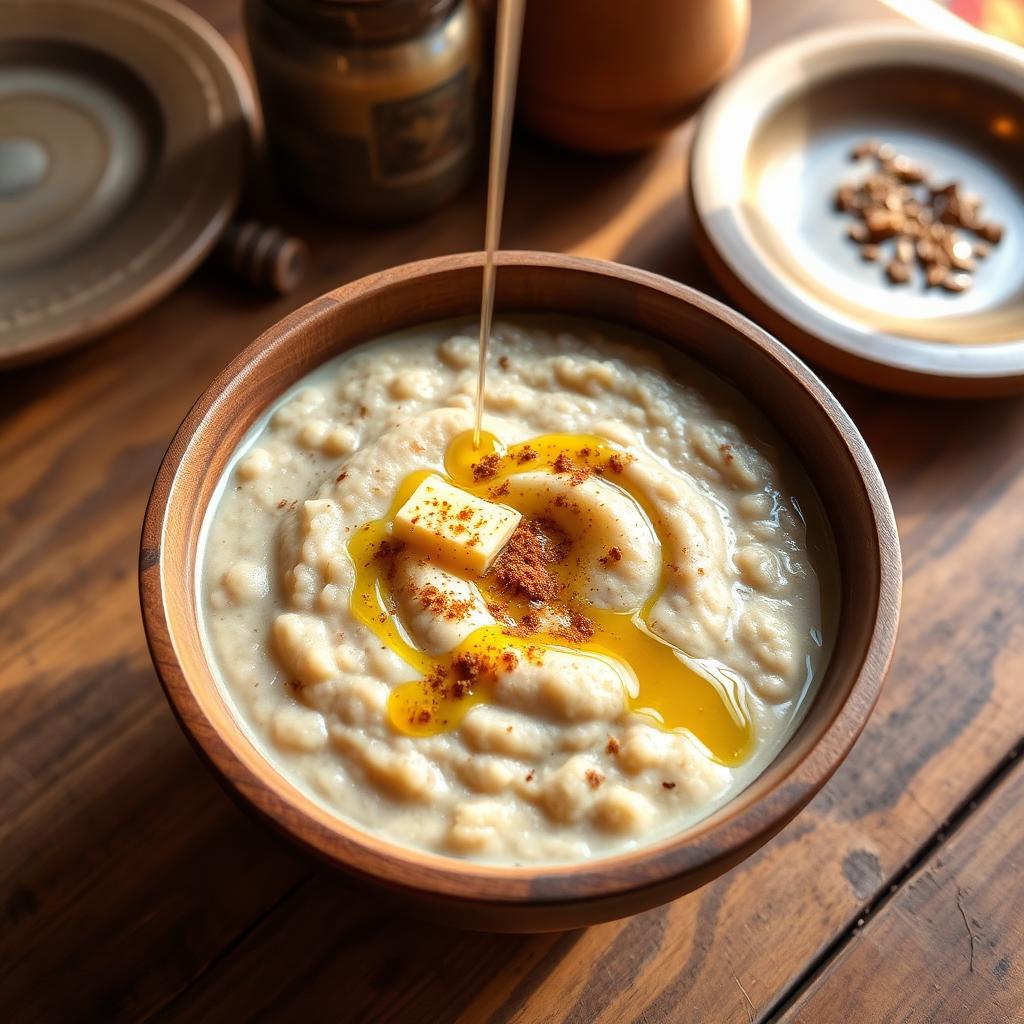
Porridge with a well of butter
A thick porridge of barley, wheat, or maize, poured into a bowl with a deep well of niter kibbeh at its center. Winter food, celebration food, the food of new mothers.

Coffee, from the land it came from
Oromia is the original home of coffee. The ceremony, roast, grind, brew in a clay jebena, pour into small cups over fresh-cut grass, is a ritual of welcome, not a caffeine run.
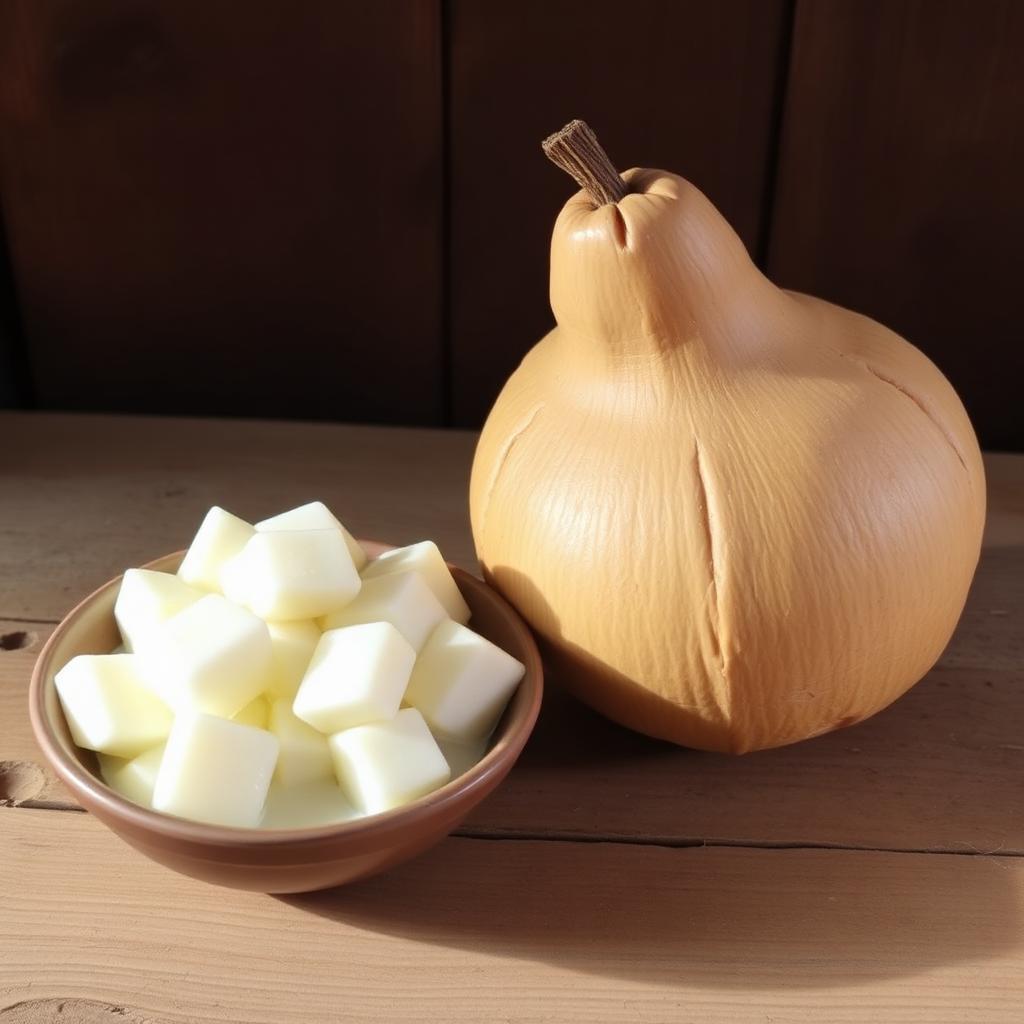
Fermented milk curds
Cow's milk fermented in a smoked gourd until it splits into firm white curds. Rich, tangy, deeply pastoral, the food of cattle-keeping communities across the Oromia highlands.
A note
Oromo cuisine varies widely across regions, from the enset-based dishes of the south to the grain and dairy tradition of the central highlands. This page is an introduction, not the whole table.